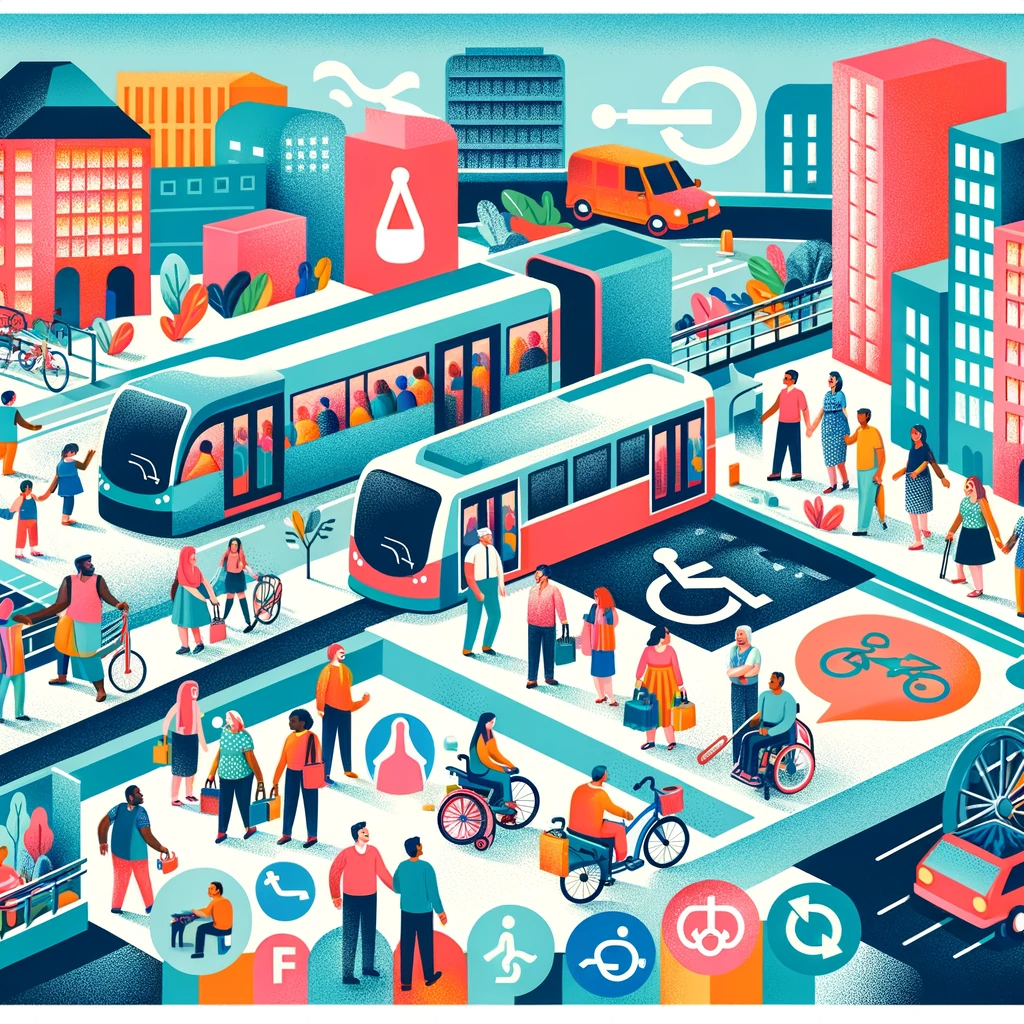
Los Angeles vs. San Francisco: Divergent Approaches to Urban Transportation in California
My recent travels to Los Angeles and San Francisco, California’s two major urban hubs, offered a fascinating glimpse into their distinct transportation dynamics.
Los Angeles: The Car-Centric Metropolis
Dominance of Personal Vehicles: In Los Angeles, personal vehicles are the primary mode of transportation. This preference is a reflection of the city’s sprawling layout, where distances between destinations are often considerable, making car travel more convenient.
Expanding Metro System: Despite its reputation for car dependency, Los Angeles boasts an extensive Metro bus and rail system. This network is an integral part of the city’s efforts to diversify its transportation options and alleviate congestion.
Emerging Bike Infrastructure: Los Angeles’ bike-sharing program is in a developmental phase, with significant improvements and expansions planned to enhance its cycling infrastructure.
San Francisco: Compact and Public-Transport-Oriented
Robust Public Transportation: Contrasting with LA, San Francisco offers a more developed public transportation system, tailored to its compact urban environment. The system includes a variety of options like buses, trains, and the iconic cable cars.
Thriving Bike-Sharing Program: San Francisco’s bike-sharing program is well-established, providing a popular and eco-friendly alternative to motorized transport.
Limited but Effective BART System: The Bay Area Rapid Transit (BART) system, though more limited in scope compared to LA’s Metro, plays a vital role in San Francisco’s transportation landscape.
Comparative Insights
Cultural and Spatial Influences: LA’s transport system mirrors its expansive geography and car-centric culture. In contrast, San Francisco’s compact urban design supports a more public-transport-friendly environment.
Navigational Ease: San Francisco’s layout and transport options facilitate easier navigation without a car, a stark contrast to Los Angeles, where personal vehicles are often seen as essential due to the city’s size.
Population and Territory: It’s essential to consider that Los Angeles is significantly larger than San Francisco, both in population and geographical size, influencing the scale and structure of their respective transport systems.
Conclusion
In summary, San Francisco emerges as more conducive to public transport, offering diverse options suited to its urban structure. Los Angeles, while predominantly car-oriented, is evolving to accommodate more sustainable and varied transport options. This comparison underscores the complex interplay of geography, culture, and infrastructure in shaping urban transport systems.
This expanded version provides a nuanced perspective on the transportation systems of Los Angeles and San Francisco, highlighting how geographical and cultural factors influence their approaches to urban mobility.